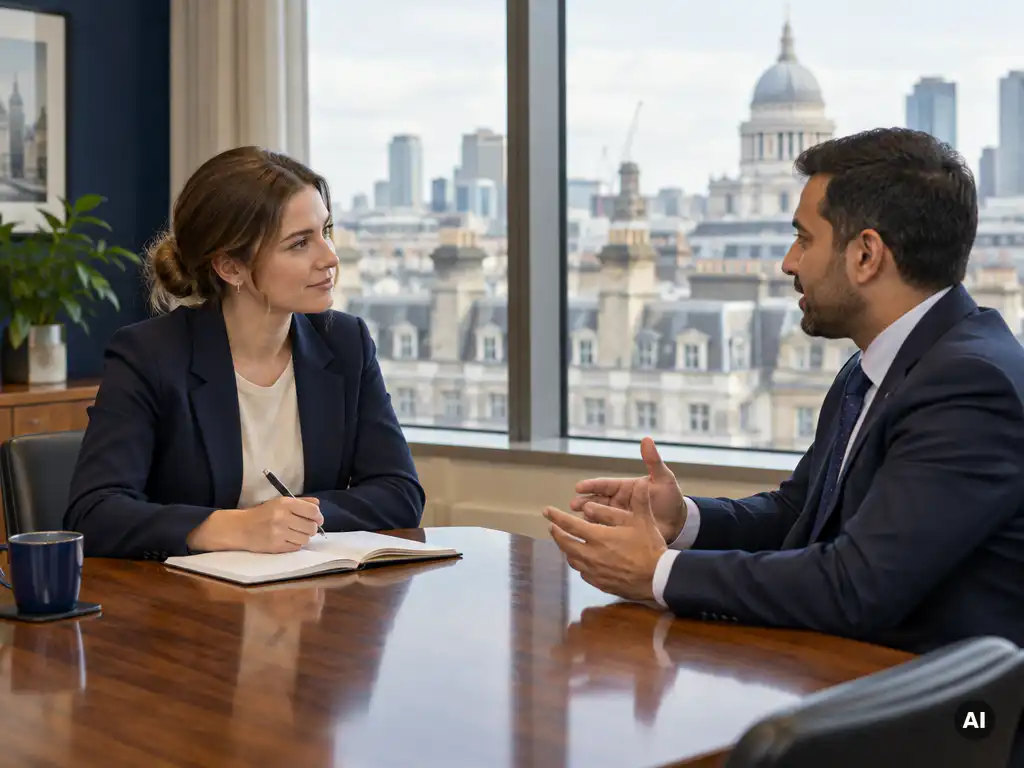
Auditors conduct interviews with coverholder staff by speaking to the people who actually perform underwriting, claims and administration tasks, asking structured, open questions about how processes work in practice, and then testing those answers against documents and system data. The interview shows whether written procedures match daily behaviour.
Interviews form a core part of insurance audit fieldwork for any delegated authority arrangement, whether the authority is delegated underwriting, claims handling or both. The sections below cover who is interviewed, how auditors prepare, what they ask, how answers are verified and how findings reach the report.
Which coverholder staff do auditors interview and why?
Auditors interview the staff who carry out the delegated activities, not just senior management. This typically includes the underwriters, claims handlers, compliance officer, finance and bordereaux team members and the managing director. Each person confirms a different part of the control environment.
Speaking to a range of roles matters because senior managers often describe how a process is meant to work, while operational staff describe how it really works. The gap between the two is frequently where the most useful audit findings sit.
A typical interview group in a delegated underwriting audit includes:
- Senior management, to understand strategy, governance and oversight of the binding authority
- Underwriters, to test understanding of authority limits, referral triggers and rating
- Claims staff, where claims authority is delegated, to test reserving, settlement and complaints handling
- Compliance and finance staff, to confirm regulatory controls, premium handling and bordereaux accuracy
How do auditors prepare for coverholder staff interviews?
Auditors prepare by reviewing the binding authority agreement, previous audit reports, bordereaux and any pre-audit questionnaire responses, then building an interview plan tailored to each role. Preparation allows the auditor to spend interview time testing real risk areas rather than gathering basic information.
Good preparation also means understanding the product. A coverholder writing niche or non-standard risks will have different underwriting judgements and claims considerations from a high-volume personal lines operation, and the auditor needs to ask informed questions in either case.
Key preparation steps usually include:
- Reading the contractual terms, authority limits and reporting requirements
- Reviewing prior audit findings to check whether earlier actions were closed
- Analysing sample bordereaux and premium data for anomalies to explore
- Agreeing the interview schedule so the right people are available
- Drafting role-specific questions linked to the audit scope
What questions do auditors ask coverholder staff during interviews?
Auditors ask open, process-focused questions that invite staff to describe their work in their own words, such as "walk me through how you handle a risk outside your normal guidelines." These audit interview questions reveal real understanding and reduce the chance of rehearsed answers.
Typical themes include:
- How underwriting authority limits are monitored and what happens when a risk falls outside them
- How referrals to the insurer are made, recorded and followed up
- How claims are notified, reserved and settled within delegated authority
- How complaints are logged, escalated and resolved
- How staff are trained and how they keep up with regulatory changes
- What staff would do if they spotted an error or a potential conflict of interest
Auditors usually move from general questions to specific scenarios. Asking "what would you do if..." allows them to judge whether staff understand the rules or simply know where the manual is kept.
How do auditors verify what staff say in interviews?
Auditors verify interview answers by tracing them to documentary and system evidence, such as policy files, claims files, referral logs and bordereaux. Any statement that cannot be supported by evidence is treated as unverified, regardless of how confident or credible the person sounds.
This approach, often called audit evidence verification, usually involves file testing alongside the interview. If an underwriter says every out-of-guideline risk is referred, the auditor selects a sample of files and checks whether referral records exist and whether approval was obtained before binding.
Verification commonly includes cross-checking what different staff members say. Where an underwriter and a claims handler describe the same process differently, the inconsistency becomes a line of enquiry in its own right.
What red flags do auditors look for in staff responses?
The main red flags are inconsistent answers between staff, vague or evasive descriptions of process, reliance on a single individual's knowledge and answers that contradict file evidence. These signals suggest weak controls, poor training or a gap between documented procedure and practice.
Other warning signs include:
- Staff unable to explain their own authority limits
- Referrals described as "informal" or agreed verbally with no record
- Reluctance to show files or system records when asked
- Workarounds that bypass documented controls
- Uncertainty about complaints or conduct risk obligations
A single red flag is not proof of a failing. Auditors weigh each one against the wider evidence before deciding whether it represents a finding, an observation or simply a point to clarify.
How are interview findings recorded in the audit report?
Interview findings are recorded as part of the evidence supporting each audit finding, typically stating what staff reported, what the file or system evidence showed and why any gap matters. The report links the observation to a recommendation and a risk rating so the insurer can act on it.
Clarity is essential. A well-written report explains the issue, its significance and the reasoning behind each recommendation, rather than listing observations without context. Reports should also be delivered within the agreed timeframe, so findings are still current when the insurer and coverholder agree remedial actions.
Interview notes are usually not attributed in a way that exposes individual staff unnecessarily. The focus stays on process and control weaknesses, which keeps the audit constructive and encourages open answers in future visits.
How Otter Audit helps with coverholder audit interviews
Otter Audit's ACII-qualified auditors carry out delegated authority audits that combine structured staff interviews with rigorous file testing, so findings rest on evidence rather than opinion. With experience across more than 500 firms in 50 countries, the team understands both specialist products and the practical realities of coverholder operations.
- Role-specific interview plans built around your binding authority terms
- Verification of staff answers against underwriting, claims and complaints files
- Clear, actionable reports delivered on time
- Technical expertise across diverse and niche insurance products
To see how this works in practice, explore our delegated authority audits or contact the team to discuss your next audit.
Related Articles
- How are risk-based insurance audits different from standard audits?
- How should insurers prepare their intermediaries for an audit?
- When should an audit finding be considered resolved?
- Can an insurance audit be completed entirely remotely?
- How does an auditor select files for a delegated authority review?